The Sniff Test: Sending Flowers to a Home With Cats and Dogs
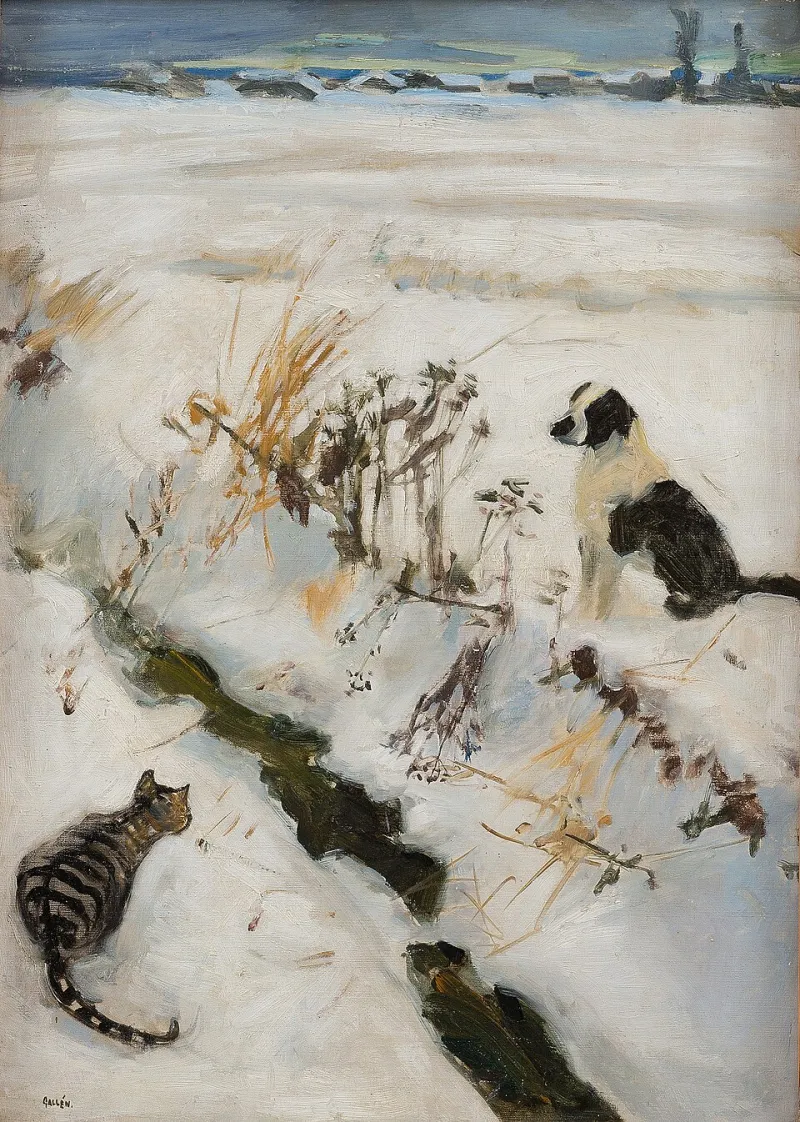
Photo: Akseli Gallen-Kallela, Public domain, via Wikimedia Commons
Flowers and pets share a lot of floor space in UK homes. A bouquet arrives, the cat claims the wrapping paper, the dog investigates the box, and suddenly you are googling whether a stray leaf is a problem. The good news is that most flower gifts can be made pet-safe with a little forward planning. The less good news is that a few very common bouquet ingredients are genuinely risky, especially for cats. This is not a reason to stop sending flowers. It is a reason to ask one extra question before you order.
Start with the animals, not the arrangement
Before you choose colours or count stems, think about who will be sniffing the vase. Cats are the main concern because they groom themselves and are sensitive to certain plants. Dogs are more likely to knock a vase over or chew a stem, but they can also react badly. The RSPCA and PDSA both keep useful lists, and your vet is the best source if you are worried. You do not need to panic — you need to know the household.
A quick text is often enough: 'Thinking of sending you something — any pets I should avoid flowers for?' That one line can change the whole order. If the gift is a surprise, choose a pet-safe default rather than asking the recipient to do the safety check after the doorbell rings.
The stems worth knowing about
Lilies are the big one for cats. Every part — pollen, petals, leaves, even the water in the vase — can cause serious illness, and it does not take much. If a household has a cat, lilies are off the list. Daffodils, tulips, hyacinths and amaryllis are also common spring and winter bouquet stems that can upset pets, particularly when bulbs or vase water are involved. Lily of the valley, foxgloves and azaleas are other names to check. For dogs, daffodils, tulips and lily of the valley are among the usual suspects.
This does not mean every bouquet is dangerous. It means the flower list matters. A mixed bunch from a supermarket may contain stems you would not expect, and seasonal foliage can change without the label telling you. If you cannot identify something in the mix, treat it as a question to ask rather than a risk to guess at.
Read the ingredients, not the bouquet name
Bouquet names are lovely and vague. 'Spring Sunshine' or 'Winter Hug' tells you the mood, not the stems. Before ordering, ask for the actual flower list. A good florist will tell you what is in the mix and what might change with the season. Watch for phrases like 'seasonal foliage may vary' — that is honest, but it means you should ask what the foliage is likely to be.
If you are ordering online, check the product page for an ingredient list. If there is not one, email or call. A quick question is cheaper than a vet bill, and most florists would rather swap a stem than worry about a pet. At Florifi, we think the best flower gift is one that fits the whole household — paws included.
Ask the recipient three useful questions
Surprise flowers are lovely, but a surprise bunch in a cat household can create work. If you can, ask: Do you have pets? Where will the vase live? Would you rather I choose a pet-safe mix? You do not need to make it a formal interview. Keep it light and practical.
If the gift is a surprise, add a note asking them to check the stems before arranging. It sounds small, but it gives the recipient permission to move the vase somewhere safer without feeling ungrateful. A bunch that arrives with a 'please check this one against your cat' note is still a bunch that arrived.
Pet-safe alternatives that still look like a gift
Roses, sunflowers, snapdragons and stocks are usually cited as lower-risk options, and they can make a generous bouquet. Add texture with grasses or safe foliage, and use colour rather than novelty. A de-thorned rose and sunflower mix feels cheerful; snapdragons and stocks give height and scent without shouting for attention.
Even pet-safe flowers should not be eaten, so keep vases out of reach where possible. Avoid lilies entirely in cat homes, and skip anything you cannot identify. If you are sending to a household with a known chewer, a vase with a narrow neck and a stable base is a sensible extra precaution.
If you are the one receiving flowers
Say thank you, then check. Put the bouquet somewhere the cat cannot reach while you look up the stems, and wash your hands after handling. If you are unsure, ask the sender or the florist for the list. If a pet has chewed something, contact your vet straight away — do not wait for symptoms.
A calm checklist before you order
- Ask whether the home has cats, dogs or both.
- Request the stem list, not just the bouquet name.
- Avoid lilies in cat households.
- Check that vase water and bulbs are out of reach.
- Choose a florist who will swap stems without making it awkward.
- Add a note: 'Please check the stems before arranging — thinking of your pets.'
The bottom line
A kind gesture should not turn into a vet visit. With one extra question and a stem list, you can send flowers that fit the whole household — pets included. That is not alarmist; it is just good manners with petals.