The Anti-Bouquet Brief: What to Send When Someone Says 'Please Don't'
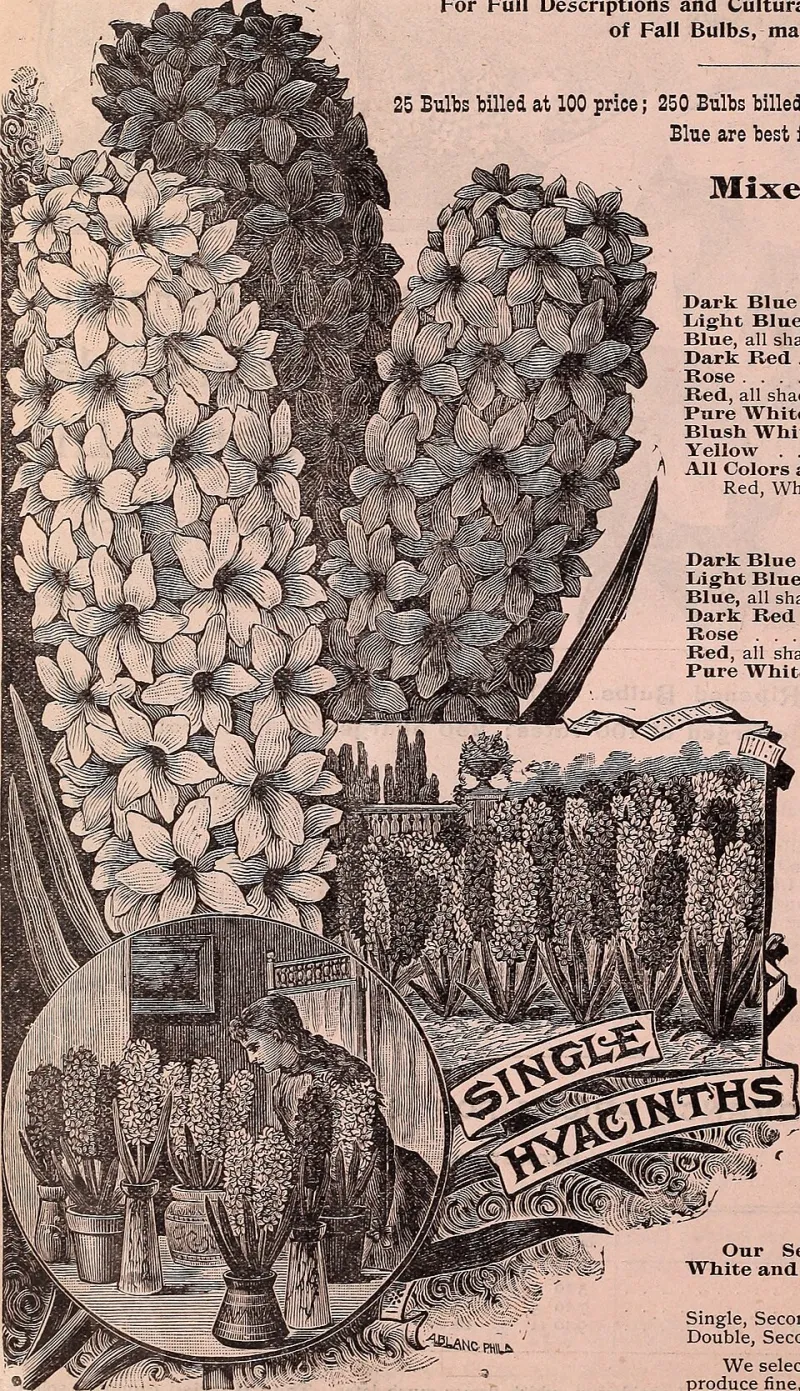
Photo: Z. De Forest Ely & Co; Henry G. Gilbert Nursery and Seed Trade Catalog Collection, No restrictions, via Wikimedia Commons
You ask what they would like for a birthday, a thank-you, a get-well-soon. They smile and say: don't buy me flowers. It can feel like a small trap. Do they mean it? Are they being modest? Will a bunch be secretly welcome, or will it become one more thing to manage?
The honest answer is: usually, they mean it. Not always for the reasons you expect, and not always in the same way. But the kindest starting point is to take the sentence seriously rather than treat it as a riddle to solve with a bigger bouquet.
First, believe the sentence
If someone says they do not want flowers, the default should be to believe them. That does not mean they dislike beauty or thoughtfulness. It means the standard cut-flower gift does not fit their life right now.
It might be the fuss. The hunt for a vase. The petals on the table. The knowledge that the stems will droop by next week. A small flat, a cat with an appetite for foliage, a habit of travelling, or a deep dislike of waste can all make a bouquet feel less like a gift and more like a task. None of that is a rejection of you.
The difference between a preference and a reflex
There is a genuine preference, and there is the reflex. The difference is usually in the detail.
A genuine preference tends to come with reasons: no vase, hates the smell of lilies, the cat eats everything, the flat is tiny, they feel guilty composting stems. It is consistent. They have said it before. They may admire flowers in a garden and still not want them on a table.
A reflex is quicker and softer. It might be a modest 'oh, you shouldn't have' delivered with a smile, or a general 'I'm not really a flowers person' from someone who has happily displayed every bunch they have ever received. Look for evidence, not just the words. Have they kept previous flowers? Do they mention scent, colour, or a particular bloom? Do they send flowers to other people?
If you are genuinely unsure, one gentle question is enough: 'I was thinking of something small and scented rather than a big bouquet, or I could go non-flower. Which would you actually prefer?' Ask once. If the answer is still no, stop there. Turning a kind gesture into a negotiation is worse than sending nothing.
What 'no flowers' often really means
Most of the time, the objection is not to flowers themselves. It is to the package around them: the arranging, the vase, the waste, the obligation to display, the overpowering scent, the sense that you must make a fuss.
So the best alternatives are not necessarily non-floral. They are low-friction. They remove the jobs that come with a bouquet.
A single scented stem
One stem can be a complete gift. A hyacinth bulb in a glass jar on a windowsill, a single scented narcissus, one garden rose in a small jam jar, or a sprig of rosemary in a tiny vessel. It gives scent and life without asking anyone to find a big vase or spend ten minutes trimming stems.
This works especially well for people who like the idea of flowers but not the performance of a bouquet. Keep it simple. Do not wrap one stem in three layers of paper and ribbon, or it starts to look like a bouquet in disguise.
A potted plant with a future
A potted herb, a cyclamen, an amaryllis bulb, a small olive, or a compact Christmas cactus can be a better fit than cut stems. It has a future. It does not need arranging. It can live on a kitchen windowsill or be planted out later.
Be realistic about care, though. A potted plant is only a good gift if the person wants to look after it. A rosemary in a sunny kitchen is a pleasure; a delicate fern in a dark hallway is a slow goodbye. In November 2026, a bulb that will flower indoors over the coming weeks can feel especially welcome without demanding much instant attention.
Dried arrangements
Dried flowers suit people who dislike waste and do not want to change vase water. A small tied bunch of dried lavender, grasses or seed heads can last for months and needs no maintenance beyond a light dust.
They are not for everyone. Some people find dried stems dusty or a little gloomy. Choose small and considered rather than a giant dried centrepiece. A modest bunch tied with twine feels like a quiet gesture, not a decorative takeover.
A doorstep posy small enough to need no arranging
A tiny hand-tied posy, already arranged and short-stemmed, can fit in a mug or a small jar. It is a bouquet, technically, but it removes the two biggest objections: the vase hunt and the arranging.
Look for something described as a posy rather than a bouquet, and check the dimensions. If it arrives in water or in its own small container, even better. The gift is the thought, not the volume.
Flower-adjacent gifts
Sometimes the right move is to step sideways. A garden visit to an RHS garden or a National Trust property gives a flower lover a day out without asking them to look after cut stems. A local flower farm tour or a gardening workshop can be a lovely experience gift.
For practical people, a good pair of secateurs is a genuinely useful present. Felco No.2 is the classic, but any well-made pair will do. Add gardening gloves, a seed subscription, a bulb-planting kit, a botanical print, or a nice watering can. These are gifts with a future and no vase required.
A few wrong turns
Do not send a huge bouquet immediately after someone has said no. Do not buy a vase as a subtle hint. Do not send lilies to a home with cats, however beautiful they are. Do not turn the conversation into a debate about whether they really meant it. And do not send a 'guilt bouquet' with a note about how the stems are compostable, as if the gift comes with homework.
A simple way to decide
If they have given a reason, honour it. If they have said no without a reason but have a history of enjoying flowers, ask one low-stakes question. If they have said no repeatedly, choose non-flower or flower-adjacent. If you are still stuck, a potted herb, a small dried bunch, or a garden visit is usually a safe, thoughtful bet.
The best gift is the one they do not have to manage. 'Don't buy me flowers' is not a challenge to overcome. It is an instruction, and following it with care is its own kind of bouquet.